Who is the Hogfather?
Is Death the best character ever written?
And did Sir Terry Pratchett secretly understand the quantum field?
We may or may not answer these questions here — but welcome to Mythic Mirror, a podcast for fans of myth and fantasy who want to live a magical, fulfilling life.
Why The Hogfather?
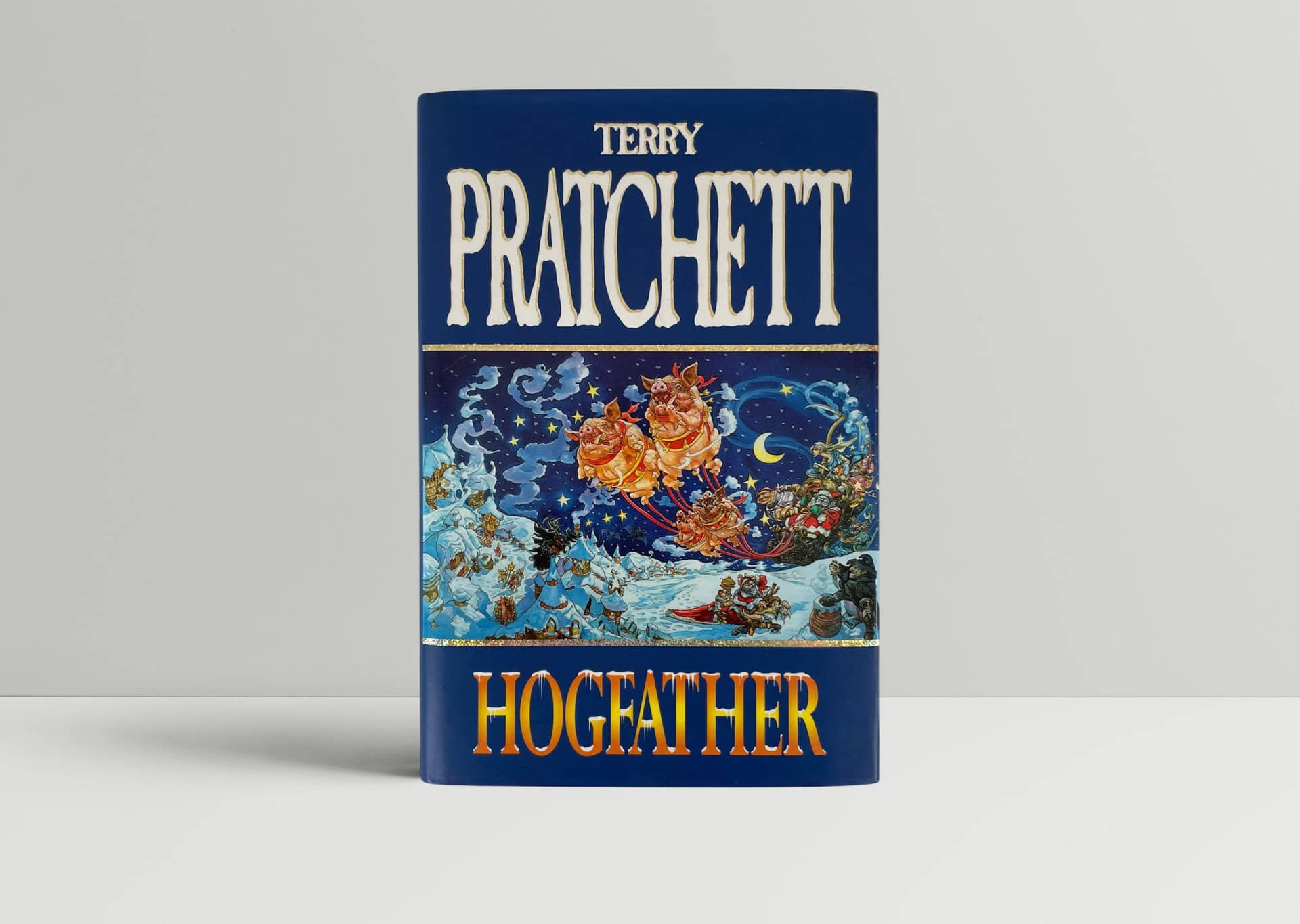
If you haven’t yet introduced yourself to the Discworld, please do so immediately. Hogfather is Pratchett’s brilliant, darkly funny reimagining of Christmas—Hogswatch—where the Hogfather is essentially Santa Claus and belief itself is under attack.
At its heart, this book asks a dangerous question:
What happens if belief disappears?
In Hogfather, a force that finds life too messy, too illogical, attempts to eliminate humanity by eliminating belief itself. Kill the Hogfather, control belief, and humanity collapses.
Which makes this book exactly what Mythic Mirror is about:
How belief shapes our world — and whether we can shape it intentionally.
For those unfamiliar with the book, Death spends much of the story trying to save Hogswatch — and humanity — by filling in for the Hogfather himself. Watching this intensely literal character try to understand generosity, joy, and belief is both hilarious and profound.
What struck me most is how Hogfather gently dismantles adult cynicism. We grow bitter. We call holidays childish. We dismiss ritual as silly. Why care about a fat man bringing presents?
And yet, through Death’s arc, Pratchett shows us why these things matter — deeply.
At one point, Death and his servant Albert discuss the “real meaning” of Hogswatch. Albert suggests solar festivals and ancient traditions. Death finally replies:
“The unreal meaning of Hogswatch.”
And that’s the point. Humans are, as one wizard puts it, a mythopoetic people. We create stories because we must.
Science, Myth, and the Quantum Field
One of my favorite footnotes — not included in the film — jokes about “ignorant tribal people” whose worldview mirrors that of the most advanced physicists.
The deeper we go into science, the more magical reality becomes.
While reading Hogfather, I was also reading Joe Dispenza’s Breaking the Habit of Being Yourself, which explores the quantum field and how our thoughts and emotions shape our future. What we expect — consistently — is what we create.
In Hogfather, Death asks a thinking machine what will save the Hogfather. The answer:
Regular and constant belief.
That’s not just magic. That’s neuroscience.
Positive thinking alone doesn’t work if it never reaches the subconscious. If your neural pathways and emotional habits remain unchanged, optimism becomes icing on a rock. Belief has to be practiced — daily.
“Humans Need Fantasy to Be Human”
Near the end of the book, Death explains why saving the Hogfather matters at all. If he hadn’t been saved, Susan argues, the sun would still rise. Death responds:
“A mere ball of flaming gas would have illuminated the world.”
And then comes one of the most powerful passages in modern fantasy:
“Humans need fantasy to be human. To be the place where the falling angel meets the rising ape.”
Tooth fairies. Hogfathers. Little lies — practiced so we can believe the big ones.
Justice. Mercy. Duty.
Grind the universe down to powder, Death challenges us, and show me one atom of justice.
And yet we live as if it exists.
That’s belief.
Ritual, Routine, and Depression
When asked about what would save the Hogfather, Hex replies, “Regular and constant belief.” Ritual and routine are embedded in that phrase regular and constant belief. Ritual marks sacred time; routine shapes daily life. Both are doorways to magic.
During periods of depression we may skip holiday rituals telling ourselves we’re conserving energy—but instead we are draining it further. Not decorating, not getting a tree, not participating only serves to alienate us from our souls.
Those small rituals connect us backward through generations. Decorating with your grandmother, who decorated with hers. We draw strength from those threads.
Lose the rituals, and something vital fades.
Houses, Hearths, and Striving Things
We talked about folklore — Celtic house spirits, hearth gods, hobgoblins as stoves, the fire as the heart of the home. These beliefs weren’t naive; they gave meaning, companionship, and care to daily labor.
In Hogfather, a thinking machine named Hex declares:
“All things strive.”
That line resonates deeply. Humans name robot vacuums. We thank objects for their service. Marie Kondo talks to houses and thanks belongings.
Acknowledging that everything strives — even matter — makes the world friendlier.
Whether literal or metaphorical, belief shapes how we move through life.
So… Why Read Hogfather?
Because it reawakens childhood whimsy — not the sanitized kind, but the kind that’s funny, spooky, thoughtful, and strange.
This isn’t a cozy Christmas story. It has assassins, thieves, nightmares, and a terrifying realm shaped by childhood belief (and children are not merciful).
As Pratchett reminds us, childhood fear isn’t smaller than adult fear — it’s larger, sharper, and more alive.
And maybe that’s the magic.
I love that you started with this book. The power of belief and the entanglement of meaning and magic is so profound in this one.